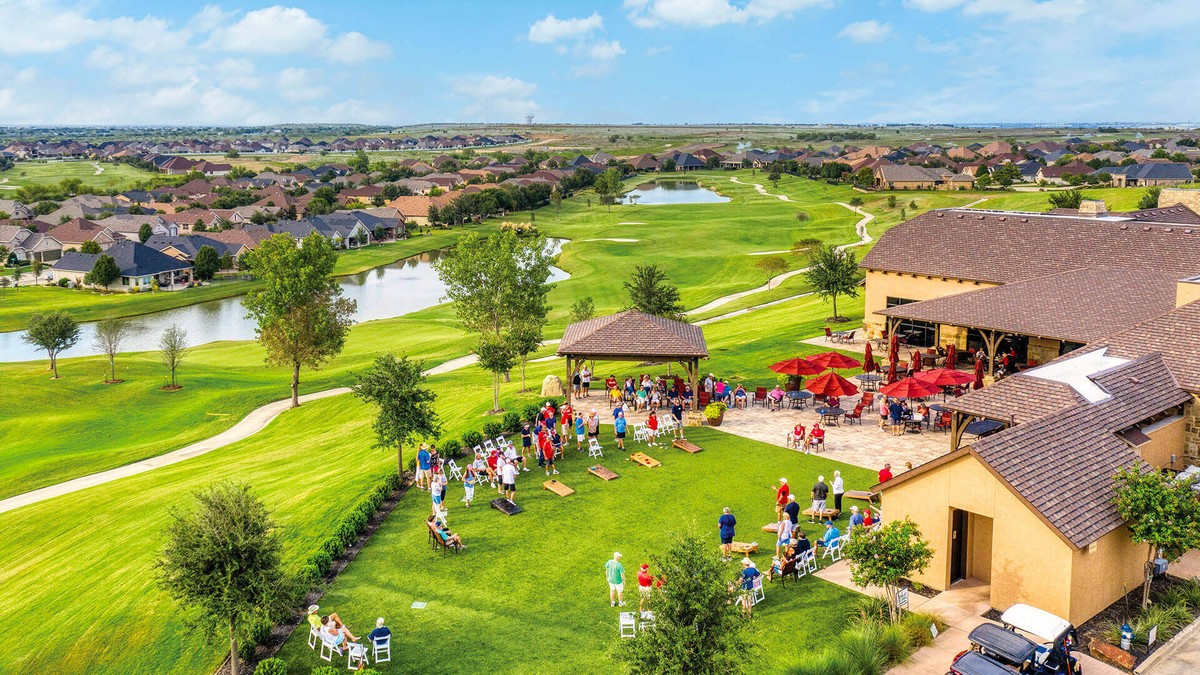
The traditional retirement community model has been around for decades. Rows of similar homes, a clubhouse, maybe a golf course. It works for some people. But a growing number of retirees are looking for something different: smaller, more affordable, more intentional, and built for the way people actually live today.
3D printed retirement villages are beginning to answer that call.
## What Makes These Communities Different
The most obvious difference is how the homes are built. Instead of traditional wood-frame construction, homes in these communities are printed on-site using large robotic printers. This brings down construction costs, speeds up the build timeline, and allows for a level of design consistency and customization that's hard to achieve with traditional methods.
But the more interesting differences are in the philosophy behind them. Many of these communities are being designed with intentionality: walkable layouts, shared green spaces, community gardens, and amenities that encourage social connection rather than isolation. The homes are smaller by design, which keeps costs down and encourages residents to spend more time in shared spaces.
## Where They Exist Today
The most prominent completed example is Wolf Ranch in Georgetown, Texas, developed by ICON and Lennar. With 100 3D printed homes, it's the largest such development in the United States. It's a general residential subdivision, not a dedicated retirement community, but it's a meaningful proof of concept. Retired residents who have moved in report lower maintenance demands and utility costs compared to their previous homes — exactly the qualities that make the model worth watching for the retirement market.
ICON has also prioritized affordability for seniors in other projects. In Austin's Mueller neighborhood, ICON-printed homes were made available with explicit priority given to seniors and families earning under 60% of area median income, demonstrating that the technology is being actively directed toward vulnerable populations, not just the luxury market.
Other developments are in various stages of planning and construction across Texas, California, and Florida. The pace is accelerating as more developers recognize the cost and speed advantages of printed construction.
Dedicated retirement-focused printed communities are still emerging, but the groundwork is being laid. Several developers are actively working on 55-and-older communities using printed construction, particularly in Sun Belt states where retirement migration is highest.
ICON CEO Jason Ballard has spoken directly to the mission behind this work: "We want people from every socioeconomic background to have a decent, dignified place to live." That framing matters for retirees. The technology isn't being developed for a narrow slice of the market. The intent, at least among the leading builders, is broader access.
## The Social Case for Community Living
One of the most well-documented risks of retirement is social isolation. When the structure of work disappears and children move away, many retirees find themselves spending far more time alone than they expected. The health consequences are real: isolation is linked to cognitive decline, depression, and a range of physical health issues.
A well-designed retirement community addresses this directly. Shared spaces, organized activities, and neighbors at a similar life stage create natural opportunities for connection. This isn't unique to 3D printed communities, but the affordability of printed construction makes it possible to build these communities at a price point that more retirees can actually access.
## What to Look for in a Printed Retirement Community
Not all communities are created equal. If you're evaluating a 3D printed retirement village, here are the factors worth examining:
**Who built the homes, and what's the track record?** Look for communities built by established printed construction companies with completed projects and satisfied residents.
**What are the ongoing fees?** HOA fees, community fees, and maintenance costs can add up. Get a clear picture of total monthly costs before committing.
**What amenities are included?** Social spaces, fitness facilities, and walkable design matter more than square footage for most retirees.
**What's the age restriction policy?** Some communities are 55+, others are 62+. Know what you're buying into.
**What does the contract actually say?** HOA rules, exit clauses, and what happens if you need to sell are all worth reviewing with a real estate attorney before you sign anything.
## The Affordability Advantage
The need is real and well-documented. The Harvard Joint Center for Housing Studies found that "a record number [of older Americans] are cost burdened and will have few affordable housing options as they age." Homelessness among adults 50 and older rose from 22.9% of the homeless population in 2007 to 33.8% in 2017, and the trend has continued. These aren't abstract statistics. They represent a generation of people who worked their whole lives and are now facing a housing market that wasn't built for them.
Because printed construction costs less and builds faster, developers can offer homes in these communities at lower price points than comparable traditionally built retirement communities. This is significant for the large portion of retirees who have modest savings and need housing that doesn't drain their resources in the first few years.
A printed home in a well-designed community, at a price point $50,000 to $100,000 below a comparable traditional home, can make the difference between a retirement that feels financially secure and one that feels precarious.
## Looking Ahead
The 3D printed retirement village is still a young concept, but the trajectory is clear. As the technology matures, costs continue to fall, and the retirement population continues to grow, this model is likely to become a significant part of the retirement housing landscape.
For retirees who want community, affordability, and a home designed for this stage of life, it's worth watching closely and, in some cases, acting on sooner rather than later.