
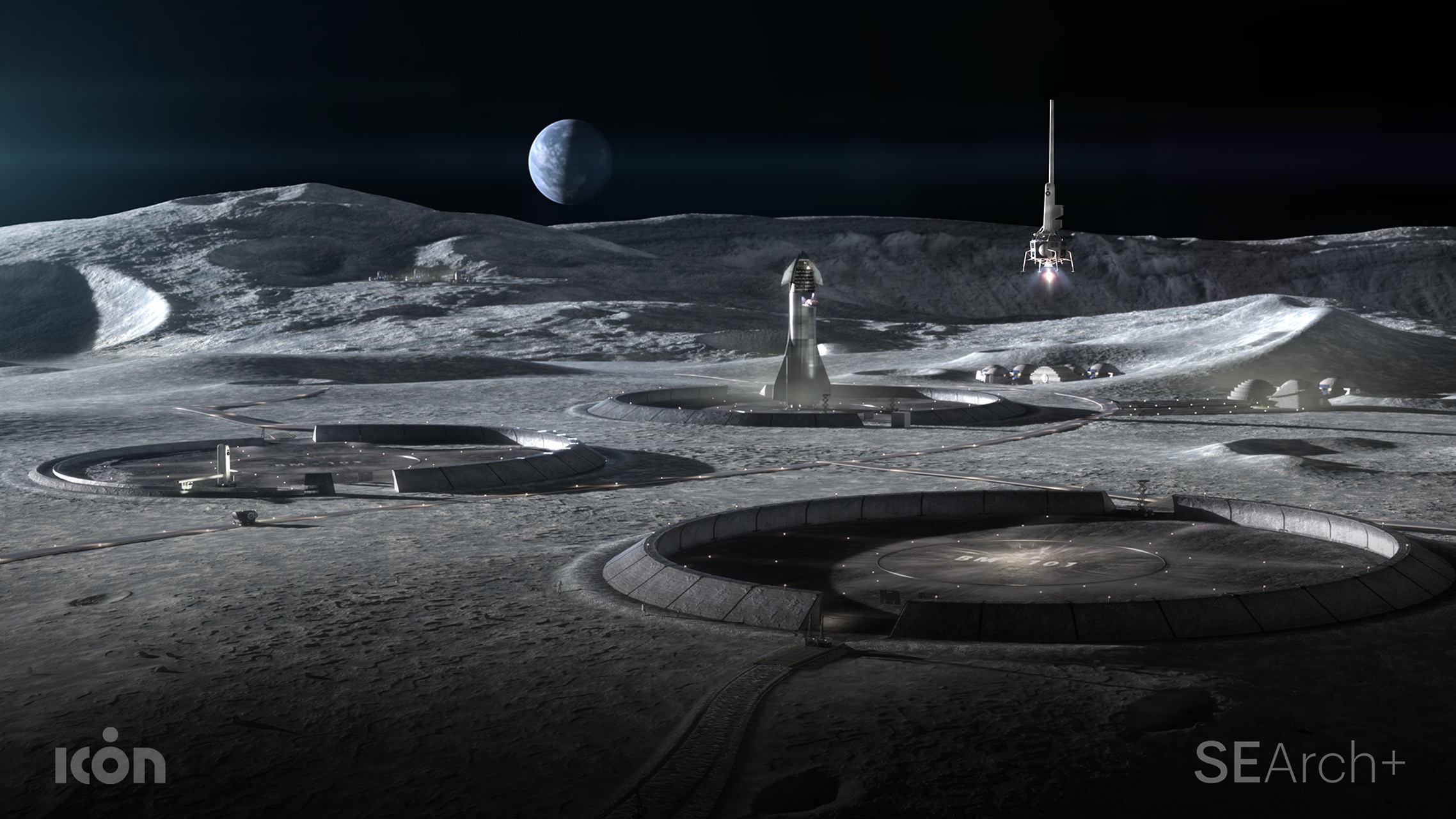
It might seem like a stretch to connect your future home to a NASA mission. But the link between space exploration and 3D printed housing is real, direct, and more relevant to everyday homebuyers than you might expect.
The Space Connection
ICON, the Austin-based company behind some of the most prominent 3D printed housing projects in the United States, has an active partnership with NASA. The goal? Develop construction technology that could be used to build habitats on the Moon and eventually on Mars.
Think about what that challenge requires. You can't ship building materials to the Moon — the cost would be astronomical (pun intended). You need a system that can use locally available materials, operate with minimal human supervision, and produce structures that can withstand extreme conditions. Sound familiar? Those are essentially the same requirements that make 3D printing attractive for housing here on Earth.
The technology developed for space applications — precision printing, material efficiency, structural resilience — feeds directly back into the residential construction industry. When you push a technology to its limits in the most demanding environment imaginable, you end up with a much better version of that technology for everyday use.
Aaka Space and the Shield Concept
Companies like Aaka Space have been working on what they call "shield" structures — 3D printed habitats designed to protect occupants from radiation, extreme temperatures, and micrometeorite impacts in space. The engineering principles behind those structures — dense, continuous material deposition, no weak joints or seams, optimized geometry for strength — translate directly into more resilient homes on Earth.
In practical terms, this means homes that are better at withstanding hurricanes, earthquakes, and wildfires. The same design logic that would protect an astronaut on Mars can protect a family in Florida.
Automation and the Future Workforce
The space industry has also driven advances in robotic automation that are reshaping construction. Machines that can operate autonomously, adapt to unexpected conditions, and maintain precision over long periods are essential for space construction — and they're increasingly showing up on terrestrial job sites.
This doesn't mean construction workers are going away. It means the nature of construction work is changing. The workers of tomorrow will be more like technicians and programmers — overseeing sophisticated machines rather than doing purely manual labor. That shift brings new opportunities and new skill requirements to an industry that's been doing things roughly the same way for generations.
Why This Matters for Homebuyers Today
You don't need to be interested in space to care about this. The practical takeaway is that 3D printed housing is backed by some of the most rigorous engineering and research happening anywhere in the world. It's not a garage startup experiment — it's technology that's been stress-tested against the harshest conditions humans can imagine.
When you buy a 3D printed home, you're buying something built on a foundation of serious science. The same innovations that will one day shelter humans on another planet are, right now, making homes on this one stronger, smarter, and more sustainable.
That's a pretty remarkable thing to be able to say about the house you live in.