Every revolution has its pioneers. In the world of 3D printed housing, a handful of companies have moved from the drawing board to actual neighborhoods — and their work is reshaping what the construction industry looks like. If you're curious about who's actually building these homes and where, here's a look at the key players.
ICON — The Name You'll Hear Most
If there's one company that has become synonymous with 3D printed housing in the United States, it's ICON, based in Austin, Texas. Founded in 2017, ICON developed its own large-scale printing system called the Vulcan, which uses a proprietary concrete material they call Lavacrete.
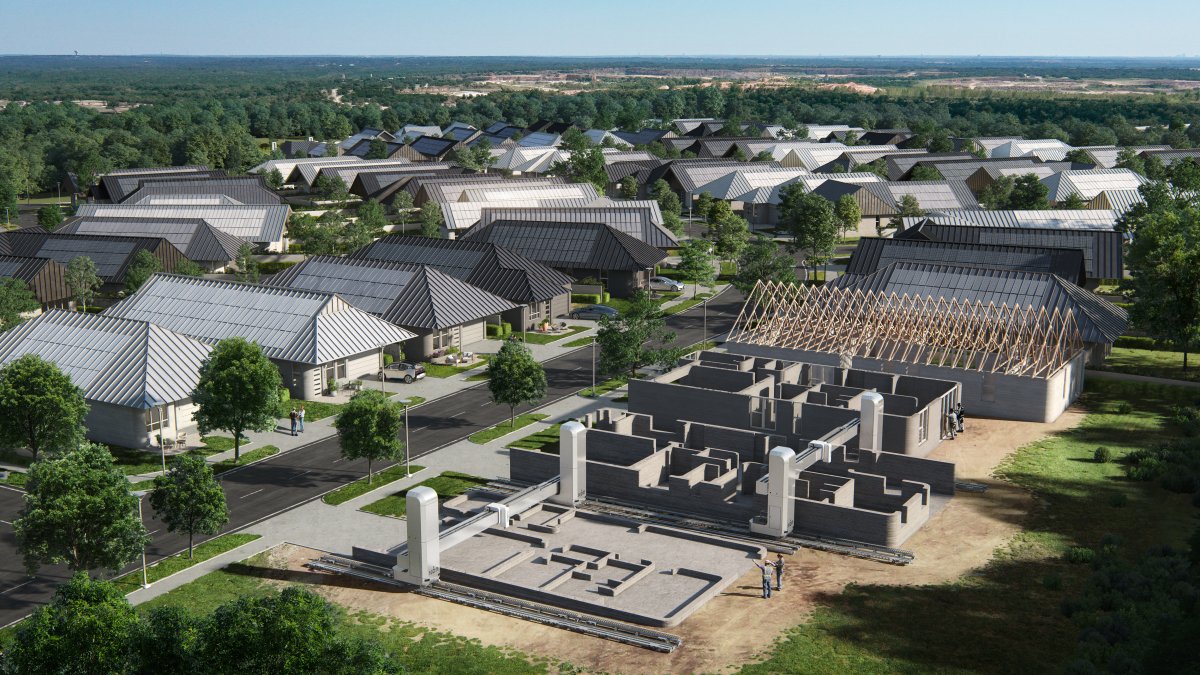
ICON made headlines with the Wolf Ranch community in Georgetown, Texas — a 100-home development built in partnership with Lennar, one of the largest homebuilders in the country. It's widely considered the largest 3D printed housing development in the world. ICON has also worked with NASA on technology for potential lunar and Martian habitats, which speaks to just how seriously the aerospace and construction worlds are taking this technology.
Lennar — The Big Builder Betting on Print
Speaking of Lennar — it's worth noting that their partnership with ICON isn't a small experiment. Lennar is a Fortune 500 company that builds tens of thousands of homes a year. When a company that size commits to 3D printed construction, it signals that this technology is moving from niche to mainstream. Their involvement brings financing infrastructure, land development experience, and national scale to the table.
HiveASMBLD and the Houston Story
In Houston, a company called HiveASMBLD made waves with the Zuri Gardens development — a community of 3D printed homes specifically designed to address affordable housing needs. With homes priced in the mid-$200,000s and down payment assistance available, Zuri Gardens became a real-world example of what 3D printing can do for working families in a high-cost housing market.
SQ4D — A Regulatory Milestone
New York-based SQ4D earned a significant distinction: they received what is believed to be the first certificate of occupancy ever issued for a 3D printed home in the United States. That might sound like a bureaucratic detail, but it's actually a big deal. A certificate of occupancy means the local government has inspected the home and deemed it safe and legal to live in. Getting that stamp of approval was a critical step in proving that 3D printed homes can meet the same standards as any other house.
Apis Cor — Printing Around the World
Apis Cor is another notable name, known for printing homes on-site using a compact, mobile printer that can be transported to a job site and set up relatively quickly. They've completed projects in Russia, the United Arab Emirates, and the United States, demonstrating that the technology isn't limited to one geography or climate.
A Global Movement
Beyond the U.S., 3D printed housing projects are popping up around the world. India has seen its first 3D printed villa. Australia has built multi-story 3D printed structures. European countries have used the technology for social housing projects. The global nature of this movement suggests it's not a regional trend — it's a fundamental shift in how humans build shelter.
For homebuyers, knowing who these companies are matters. As the market grows, understanding which builders have a track record, which have regulatory approvals, and which are partnering with established names in construction can help you make a more informed decision if a 3D printed home ever lands on your radar.