
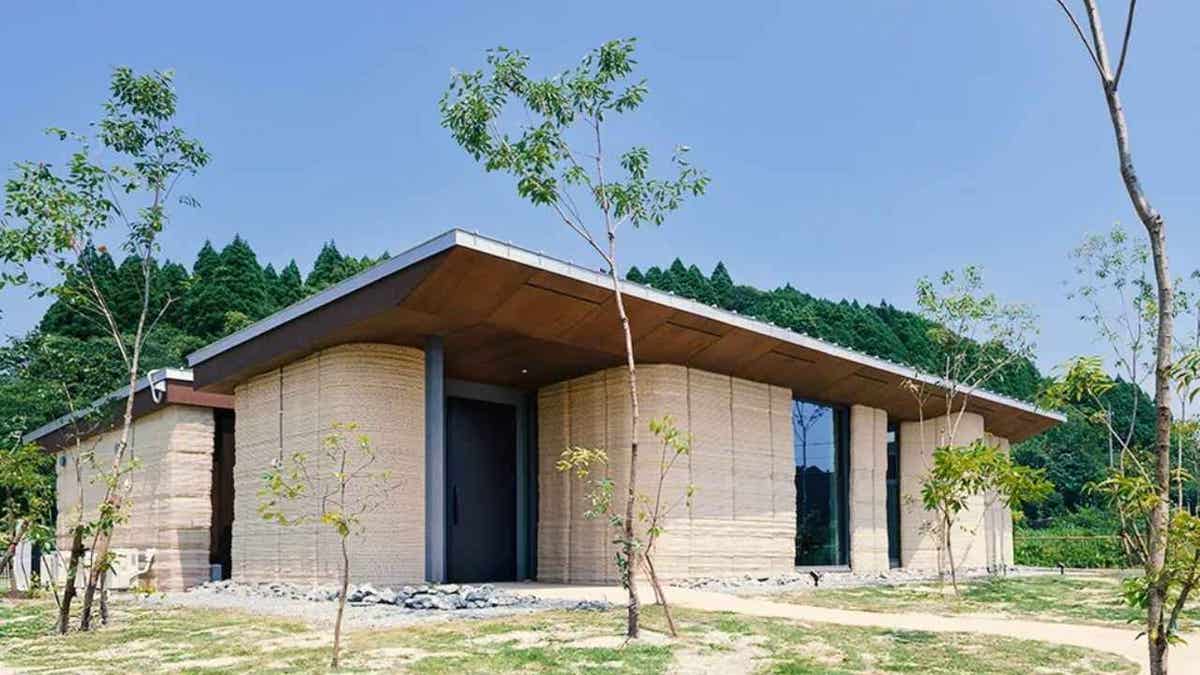
When people hear "3D printed home," they often picture something flimsy or temporary — like a plastic prototype that wouldn't survive a strong storm. The reality is almost exactly the opposite. 3D printed homes are not only durable, they're often more resilient than traditionally built structures. And they come with a surprisingly strong environmental story too.
Less Waste, By Design
Traditional construction is notoriously wasteful. Lumber gets cut and the scraps go in the dumpster. Concrete gets mixed in batches that don't always come out even. Materials get damaged, misused, or simply over-ordered as a buffer against mistakes. It's an industry that, by some estimates, generates up to 30 percent of the total solid waste in the United States.
3D printing works differently. The machine deposits material only where it's needed, following a precise digital blueprint. There's no cutting, no excess, no guesswork. Studies and industry reports have found that 3D printed construction can reduce material waste by 30 to 60 percent compared to conventional methods. That's not a rounding error — that's a fundamental shift in how efficiently we use resources.
Stronger Than You'd Think
The material most commonly used in 3D printed homes is a specially formulated concrete mixture — sometimes called "lavacrete" or proprietary blends developed by companies like ICON. This material is dense, solid, and cured to be extremely hard. The result is walls that are highly resistant to wind, fire, and moisture — three of the biggest threats to homes in many parts of the country.
In hurricane-prone areas like the Gulf Coast, or wildfire-risk zones in the West, that kind of resilience isn't just a nice feature — it's a potentially life-saving one. Some 3D printed homes have been specifically designed and tested for high-wind environments, and the solid concrete walls offer a natural barrier against fire spread that wood-framed homes simply can't match.
Mold is another issue that plagues traditionally built homes, especially in humid climates. Concrete doesn't absorb moisture the way wood does, which means 3D printed walls are far less hospitable to mold growth — a real quality-of-life benefit for homeowners and a long-term maintenance advantage.
Energy Efficiency That Shows Up on Your Bill
One of the more surprising benefits of 3D printed concrete homes is their thermal performance. Thick concrete walls naturally absorb heat during the day and release it slowly at night — a property called thermal mass. This helps regulate indoor temperatures without leaning as heavily on heating and cooling systems.
Some homeowners in 3D printed houses have reported remarkably low energy bills — in some cases, monthly electric bills as low as $26. That's not typical for every home or every climate, but it illustrates the potential. In a world where energy costs keep climbing, a home that naturally stays cooler in summer and warmer in winter is a genuine financial asset.
Eco-Friendly Materials on the Horizon
The industry is also pushing toward greener material options. Researchers and companies are experimenting with concrete mixtures that incorporate recycled materials, reduce cement content (cement production is a significant source of carbon emissions), and even use locally sourced natural materials like clay or earth. Some international projects have already used these alternative materials successfully.
The bottom line: 3D printed homes aren't just a faster or cheaper way to build — they're a smarter one. For buyers who care about the environment, about long-term durability, or simply about keeping their utility bills manageable, the sustainability story of 3D printed housing is one worth paying attention to.