
When most people think about building a house, they think about months of construction — permits, framing, inspections, delays, more delays, and finally, a move-in date that seems to keep moving further away. It's one of the most frustrating parts of the homebuilding process, and it's a big reason why housing supply has struggled to keep up with demand.
3D printed homes are flipping that script in a dramatic way.
Days, Not Months
Here's something that genuinely surprises most people when they first hear it: the structural walls of a 3D printed home can be completed in as little as 16 to 24 days. Some smaller structures have been printed even faster. A neighborhood of homes in California was reportedly framed up in just 24 days using robotic printing technology.
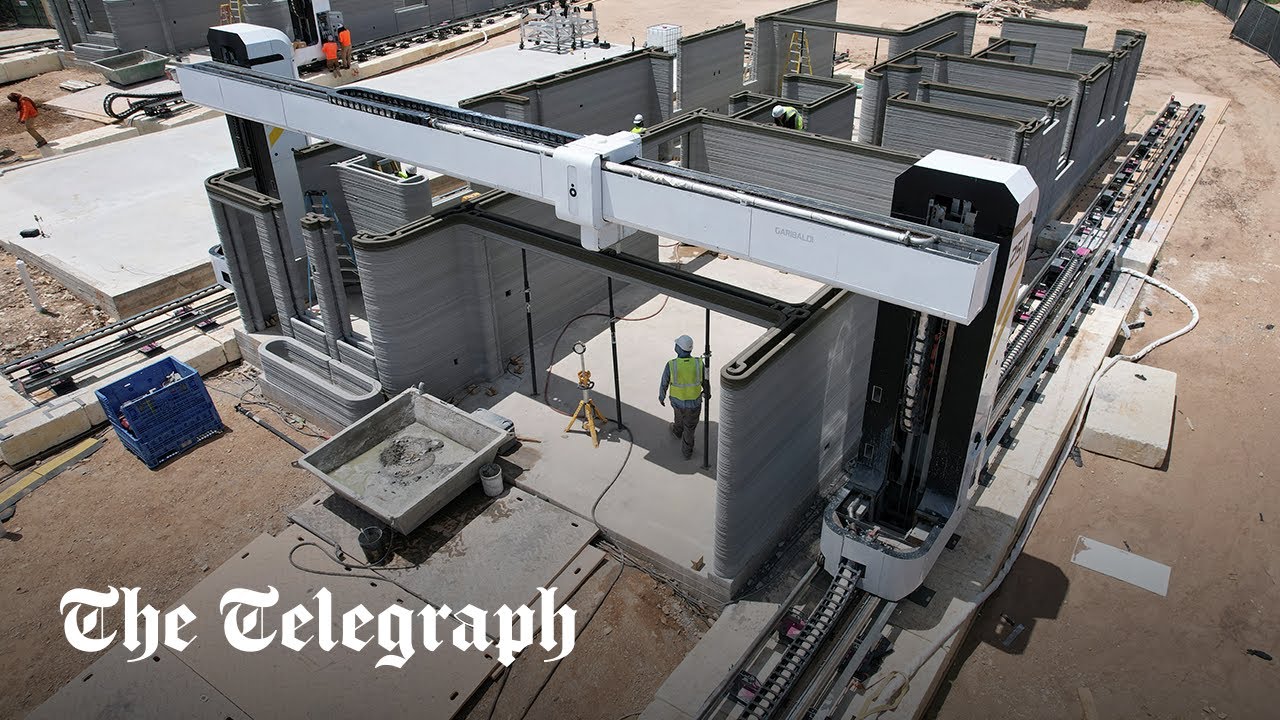
To be clear, "printed" in this context means a large robotic arm or gantry system moves along a pre-programmed path, extruding a special concrete mixture layer by layer until the walls of the home are fully formed. It's a continuous, precise process — and it doesn't stop for lunch breaks or bad moods.
That doesn't mean you can move in after 24 days. Plumbing, electrical, roofing, windows, and interior finishes still need to be completed by human crews, just like in any other home. But the structural phase — which is often one of the most time-consuming and labor-intensive parts of traditional construction — is dramatically compressed.
ICON's Wolf Ranch community in Georgetown, Texas, reported building homes roughly 50 percent faster than comparable traditionally built homes. When you're talking about a 100-home development, that kind of time savings adds up to something significant — both for the builder and for the families waiting to move in.
Why Speed Matters Beyond Convenience
Faster construction isn't just about impatience. Time is money in construction — literally. Every extra week a home sits unfinished is another week of carrying costs, labor expenses, and delayed revenue. When builders can complete homes faster, those savings can be passed along to buyers in the form of lower prices.
Speed also matters in crisis situations. After a hurricane, wildfire, or flood, communities need housing fast. 3D printing technology has been explored as a rapid-response tool for disaster relief — the ability to deploy a printer and begin building livable structures within days could be a game-changer for emergency housing.
The Human Element Still Matters
One thing worth noting: 3D printing doesn't eliminate the need for skilled workers. It changes what those workers do. Instead of swinging hammers and mixing concrete by hand, workers are programming machines, overseeing the printing process, and handling the finishing work that robots still can't do well. The construction workforce isn't disappearing — it's evolving.
For homebuyers, the takeaway is simple. If you've ever been frustrated by how long it takes to build a home — or watched a new development drag on for what feels like forever — 3D printing offers a genuinely faster path from empty lot to front door. And in a housing market this tight, faster is exactly what we need.