When people ask whether 3D printed housing can work at scale, Wolf Ranch is the project that answers them. Sitting in Georgetown, Texas, just north of Austin, it is the largest 3D printed community built anywhere in the world: 100 homes, all with printed walls, delivered as a working neighborhood rather than a one-off demonstration.
The development is a partnership between homebuilder Lennar and construction technology company ICON, with architecture by Bjarke Ingels Group (BIG). ICON calls the collection of homes the Genesis Collection. For a technology that spent most of the last decade producing single prototype houses, finishing a hundred of them on one site is a real turning point.
How the homes were built
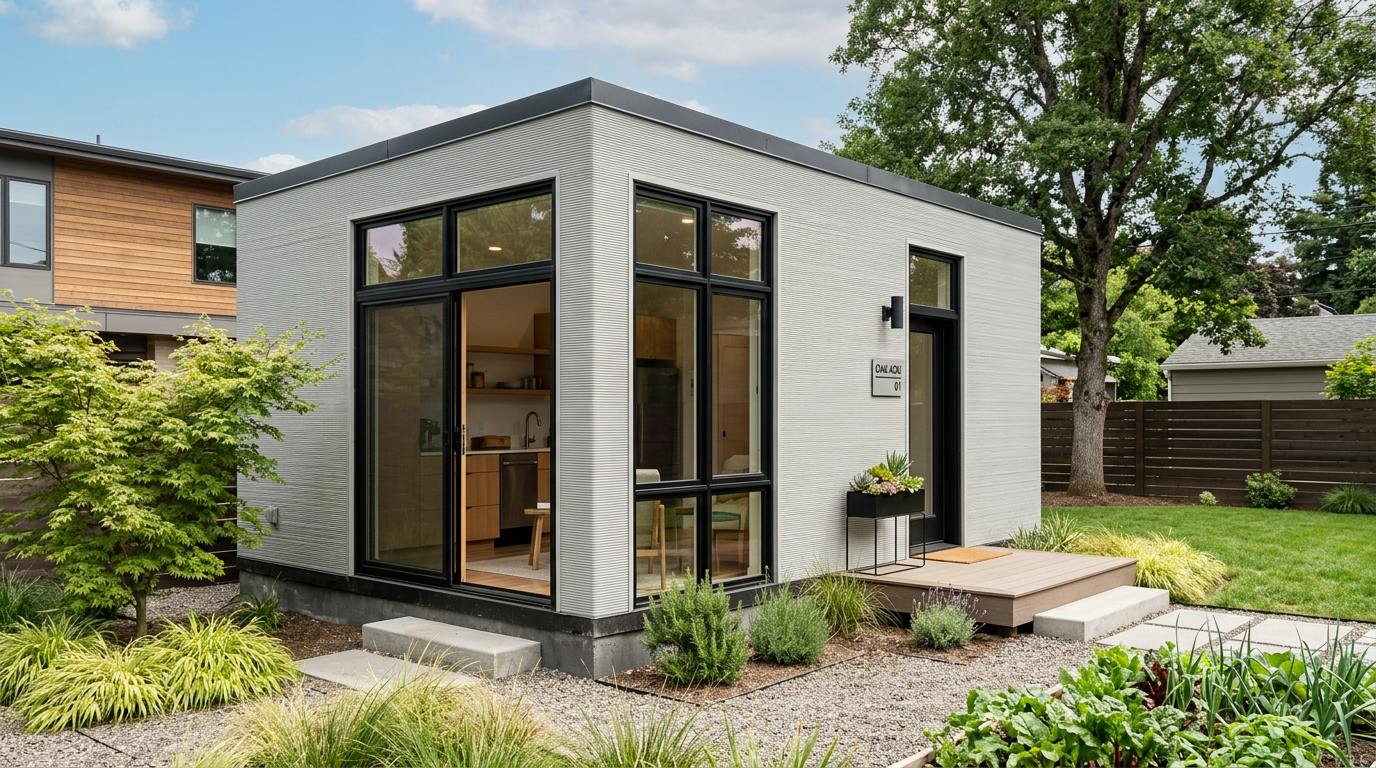
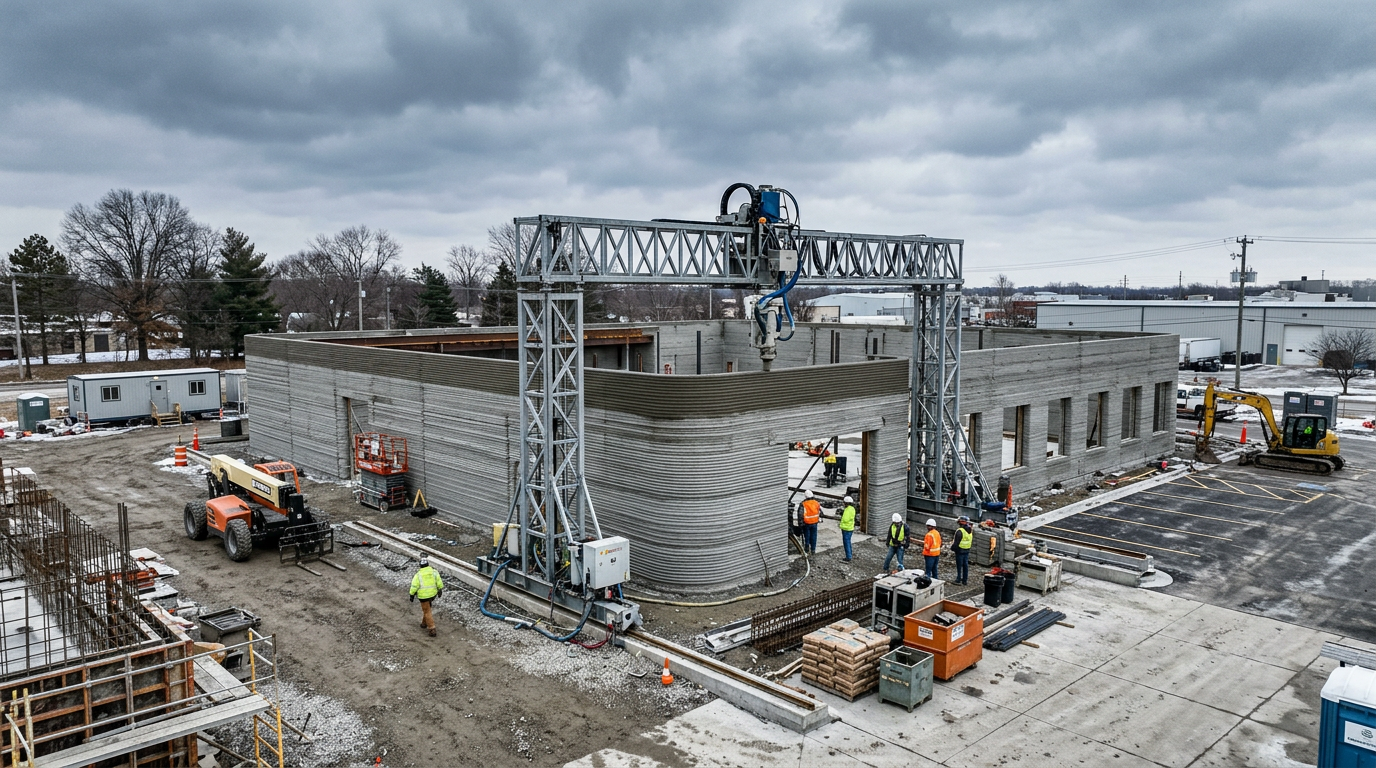
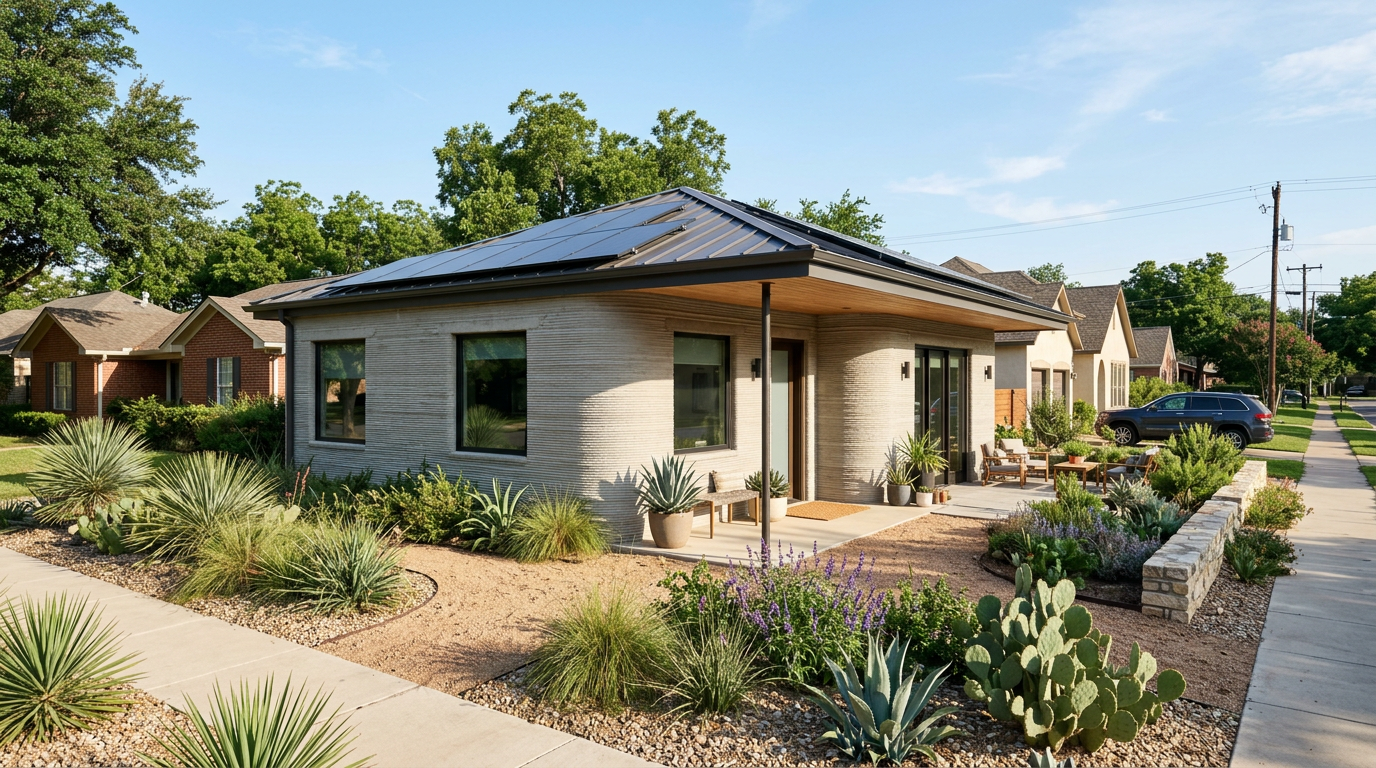
Every home starts with ICON's Vulcan robotic printing system, a gantry-mounted printer that lays down a proprietary concrete mix called Lavacrete in horizontal layers. That layering is what gives the walls their signature ribbed, corduroy-like texture, and the homes keep that look rather than hiding it behind stucco.
Construction began in 2022, and the crews got noticeably faster as the project went on. By the second year the team was running 11 printers at once and completing wall systems for about two homes every week. The printed portion covers the walls; roofing, windows, mechanical systems, and interior finishes are added by conventional trades, which is the same hybrid approach most large printed projects use today.
What the homes are actually like
Buyers at Wolf Ranch choose from eight single-story floor plans ranging from roughly 1,500 to 2,112 square feet, in three and four bedroom layouts. Each home comes with a standing-seam metal roof and a solar panel system, so energy performance was part of the plan from the start rather than an upgrade.
The concrete walls do more than look distinctive. They stand up well to Texas heat, they do not rot or attract termites, and they carry a fire resistance that stick-built walls cannot match. Prices started around $400,000, which places the homes in line with conventional new construction in the area rather than far below it.
The market response
By early 2025 roughly three quarters of the homes had sold. That matters because it shows buyers were willing to live in printed homes at market prices, not just tour them. The rounded edges and textured walls became a selling point rather than a curiosity.
What the partners learned
Lennar and ICON have been candid that Wolf Ranch behaved like a first-of-its-kind project, with higher startup costs than a mature production line would carry. The value was in the operational lessons: how to sequence printers, how to keep crews moving between homes, and where the real time savings show up.
Both companies have said they are planning a second, larger Texas community of roughly 200 homes, built at lower cost and on faster cycles than Wolf Ranch. That is the clearest signal that this was a starting point, not a finish line.
Why it matters for buyers
Wolf Ranch turned 3D printed housing from a lab story into a place with a zip code, a homeowners association, and neighbors. For anyone weighing a printed home, it is the strongest existing proof that the category can deliver a full community, financed and sold through a mainstream builder, and not just a single showpiece.