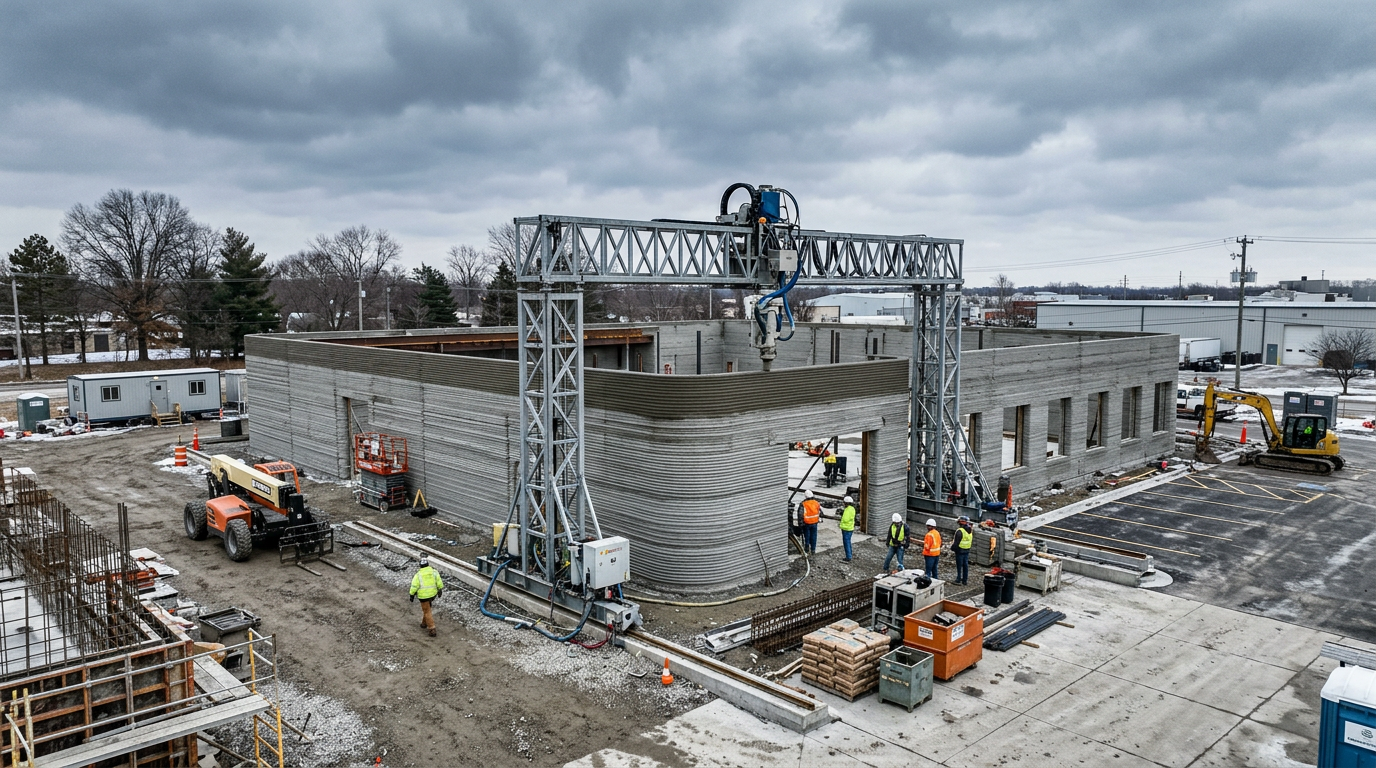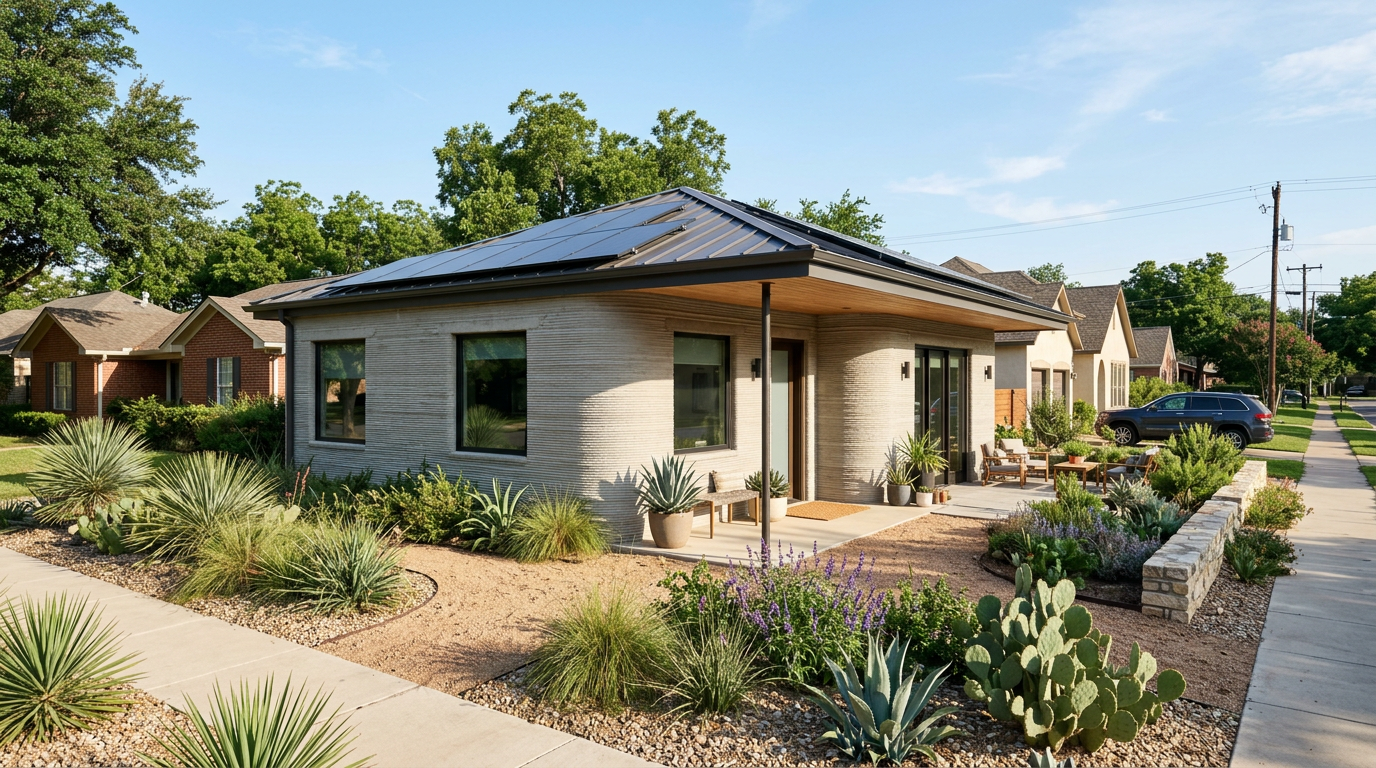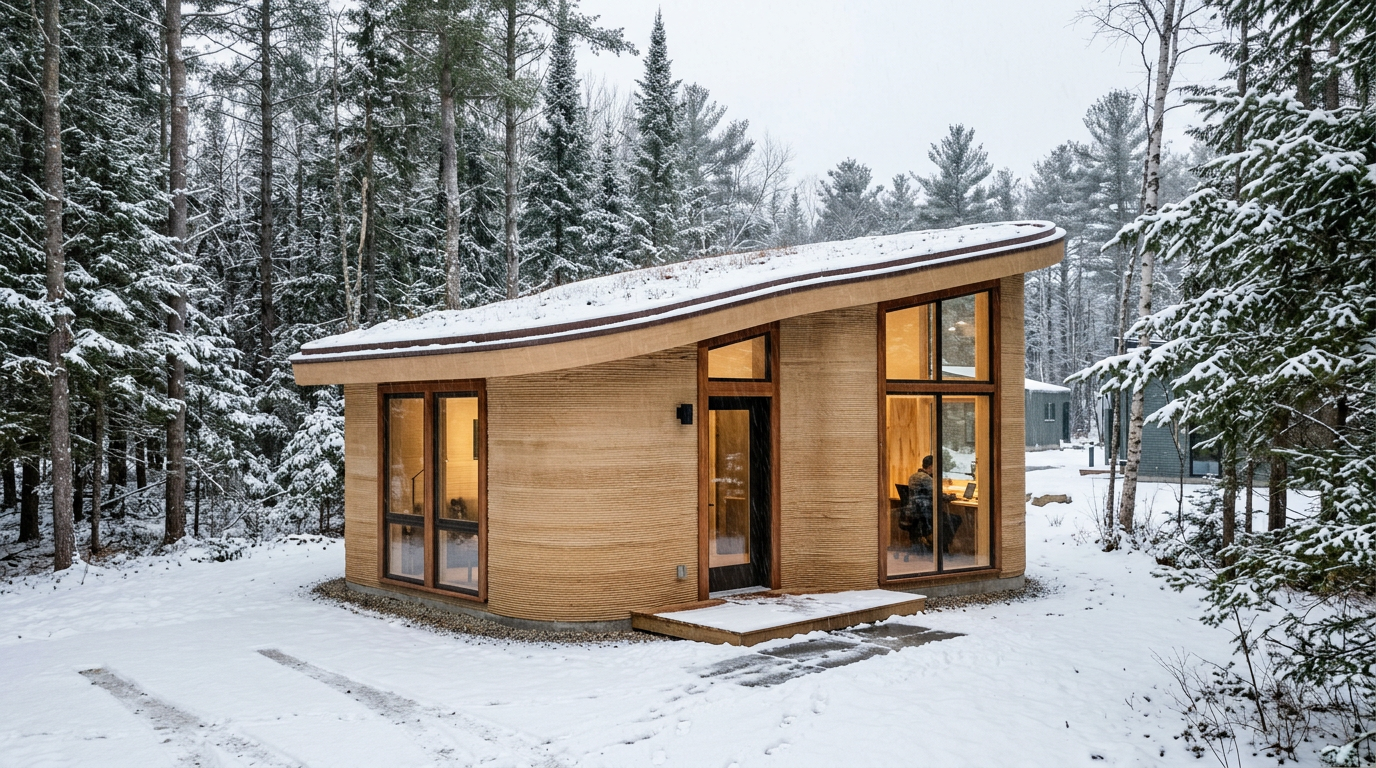
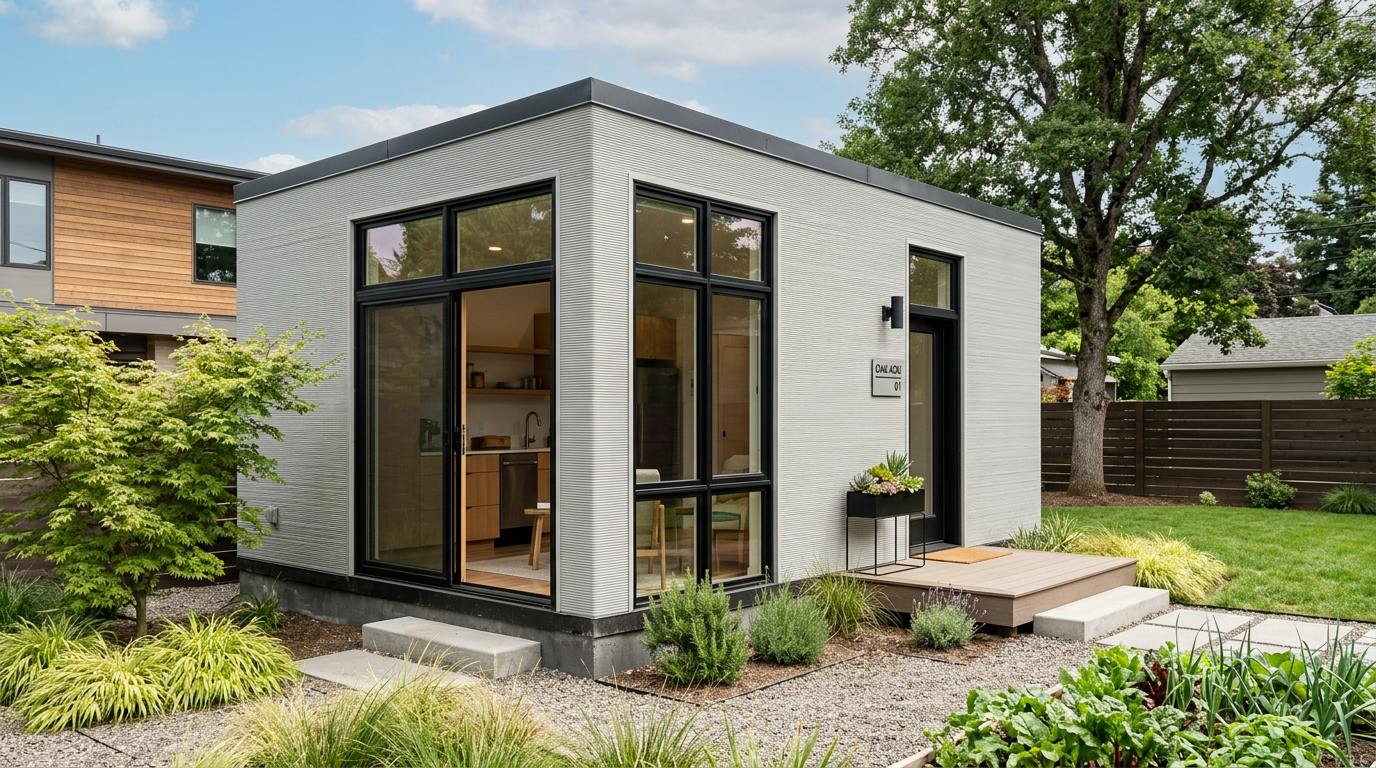
Most printed homes are made from concrete. Azure Printed Homes took a different route and built its whole approach around a material problem: what to do with the mountains of plastic waste that never get recycled. The company prints home and ADU shells from a mix of recycled plastic and fiberglass, turning packaging and bottles into structures that are meant to last.
Founded in California in 2022, Azure has moved quickly from concept to delivery. It has completed 100 homes to date and reported $7 million in sales during 2025, a scale that puts it well past the prototype stage.
A materials-first idea
Azure's printers extrude a blend of recycled plastic and fiberglass into structural shells that resist fire, termites, and weather. Those shells are then paired with light-gauge steel framing, so the finished home combines a printed exterior with framing methods that inspectors and trades already recognize.
The speed comes from the factory. A complete shell can be printed in about 24 hours, and full assembly, including plumbing, electrical, and interior finishes, runs roughly two to three weeks. Because the work happens indoors, production keeps going year round regardless of weather.
What you can actually buy
Azure's lineup is broad. It starts with 100 square foot backyard studios from around $19,900 and runs up through ADUs and full homes starting near $79,900. That range makes the company one of the more accessible entry points into printed housing, especially for homeowners who want an accessory unit rather than a whole house.
The Denver expansion
In April 2026, Azure opened a 25,000 square foot manufacturing facility in east Denver, its move into a state with a sharp affordable-housing shortage. The company designed its Colorado units to meet local requirements, including snow-load compliance and 150 mph wind ratings, and many models are built to qualify for streamlined "by-right" approval under recent Colorado housing legislation.
The expansion had public backing. Azure received a $3.95 million loan from a state affordable-housing fund, and it entered Colorado with a reported $60 million order backlog weighted toward transitional and affordable housing programs. At full capacity the company has said the factory could support 50 jobs and, over time, aims for a production target measured in thousands of units per year.
Why it matters
Azure shows that printed housing does not have to mean concrete, and that sustainability can be the starting point rather than a marketing line added at the end. For buyers, the appeal is practical: lower entry prices, fast delivery, and a home that keeps plastic out of a landfill without asking the owner to compromise on durability.